A toothache does not always mean you need a root canal. Sometimes a filling or simple dental treatment is enough. But when the soft tissue inside a tooth becomes infected or badly inflamed, root canal treatment may be needed to save the natural tooth.
At Tamyuz Dental Clinic in Salalah, we provide root canal treatment with a focus on patient comfort, careful diagnosis, and preserving your natural teeth whenever possible.
What Is a Root Canal?
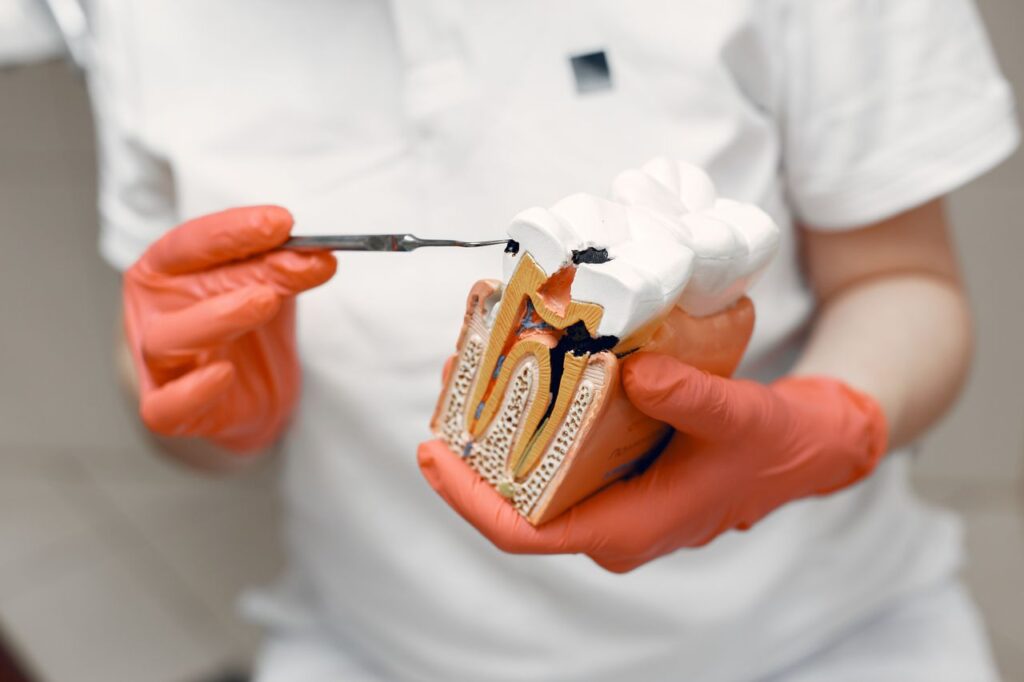
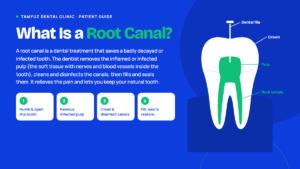
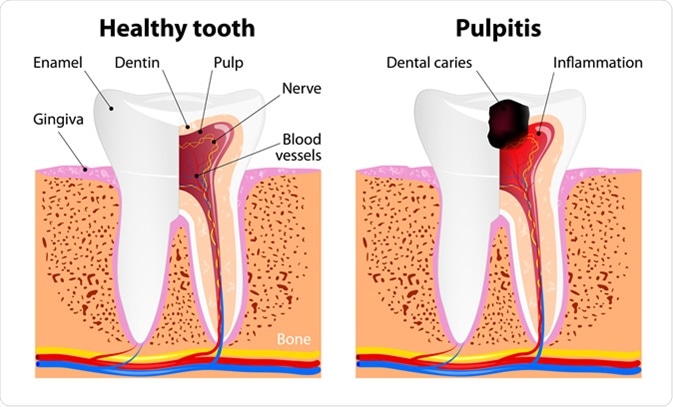
Inside every tooth is a soft area called the pulp, which contains nerves and blood vessels. Deep decay, cracks, repeated dental treatment, or an injury can damage or infect this area.
During root canal treatment, the dentist removes the infected pulp, cleans the inside of the tooth, and then fills and seals it. The goal is to remove the infection while keeping your natural tooth.
A root canal is not simply a treatment for pain. It treats the underlying problem and can help prevent the infection from becoming more serious.
6 Signs You May Need a Root Canal
1. Severe Tooth Pain
Strong or persistent tooth pain, especially when chewing or biting, can be a sign that the pulp inside the tooth is damaged or infected.
For example, if you can eat normally on one side but experience sharp pain whenever you bite with one particular tooth, it is worth having it checked by a dentist.
2. Long-Lasting Hot or Cold Sensitivity
A quick sensitivity that disappears immediately is not necessarily a sign of serious pulp damage.
However, if pain continues after you stop eating or drinking something hot or cold, it can indicate deeper damage to the tooth.
3. Swollen or Tender Gums
Swelling around a particular tooth can indicate an infection. You may also notice tenderness when touching the area.
Sometimes an infection can create a small bump on the gum near the affected tooth. This should be examined by a dentist.
4. A Cracked or Chipped Tooth
A crack or injury can damage the pulp even when the damage is not obvious from the outside.
If you have injured a tooth and later develop pain or sensitivity, do not assume it will go away on its own. A dental examination can determine whether the inside of the tooth has been affected.
5. Deep Tooth Decay
A small cavity can often be treated with a dental filling. But when decay reaches the pulp inside the tooth, a filling may no longer be enough.
In these cases, root canal treatment may be recommended to remove the infected tissue and save the tooth.
6. Tooth Discoloration
A tooth that becomes noticeably darker can sometimes indicate damage to the pulp, particularly after an injury.
Discoloration alone does not automatically mean you need a root canal, but it is a good reason to have the tooth examined.
What Happens If You Wait?
One of the biggest mistakes people make is waiting because the pain temporarily improves.
An infected pulp does not necessarily mean the problem has disappeared when the pain becomes less noticeable. An untreated infection can develop into an abscess and may eventually result in tooth loss.
For example, a deep cavity may start with mild sensitivity. Someone may ignore it because they can still eat normally. Later, the tooth can become painful when biting, followed by swelling or infection.
Getting the tooth assessed earlier can help determine whether a filling, root canal, or another treatment is appropriate.
Does Root Canal Treatment Hurt?
This is one of the most common concerns about root canal treatment.
Modern root canal treatment is performed using local anesthesia, so the procedure itself should not be painful for most patients. Some soreness or sensitivity can occur afterward, particularly when there was an infection before treatment.
The exact experience depends on the condition of the tooth and the individual patient.
Can a Root Canal Save Your Tooth?
Yes. The main purpose of root canal treatment is to save the natural tooth when possible.
After the infected pulp is removed, the inside of the tooth is cleaned, filled, and sealed. Depending on how much tooth structure remains and the condition of the tooth, a crown may be needed to protect it.
Keeping your natural tooth can help maintain normal chewing and biting function and may help you avoid having the tooth extracted.
Root Canal or Extraction?
Extraction removes the tooth completely, while root canal treatment aims to keep the natural tooth.
Neither option is right for every patient. A dentist needs to examine the tooth and determine whether it can be successfully treated and restored.
If a tooth can be saved, root canal treatment may be an option. If the tooth cannot be restored or has other serious problems, extraction may be considered.
When Should You See a Dentist?
Do not wait for severe pain before getting a dental problem checked.
Consider seeing a dentist if you have:
- Persistent tooth pain
- Pain when biting or chewing
- Lingering hot or cold sensitivity
- Swelling around a tooth
- A cracked or injured tooth
- Deep tooth decay
- Unexplained tooth discoloration
If you have significant facial swelling, fever, difficulty swallowing, or difficulty breathing along with a suspected dental infection, seek urgent medical or dental care.
Root Canal Treatment in Salalah

If you are looking for root canal treatment in Salalah, Tamyuz Dental Clinic provides root canal treatment as part of its dental services.
Since 2017, Tamyuz Dental Clinic has provided trusted dental care with experienced dentists, modern technology, affordable pricing, and personalized treatment focused on every patient’s comfort and smile.
Tamyuz also has a female dentist, giving patients the option to see a female dental professional if they prefer.
Tamyuz Dental Clinic
📍 Salalah Al Jadeeda, شارع مركز المحافظة
📞 +968 991 88198
Final Thoughts
Tooth pain is a signal that something may need attention. A root canal may be needed when infection or serious damage has reached the inside of the tooth, but only a proper dental examination can determine the right treatment.
If you are experiencing persistent pain, sensitivity, swelling, or discomfort when chewing, getting the tooth checked early can help you understand the problem and available treatment options.
Looking for a dental clinic in Salalah? Contact Tamyuz Dental Clinic and book an appointment for an assessment.
Frequently Asked Questions
1. How do I know if I need a root canal?
Persistent tooth pain, lingering sensitivity to hot or cold, pain when chewing, swelling, deep decay, or tooth discoloration can be signs of pulp damage. A dentist needs to examine the tooth to confirm the cause.
2. Does root canal treatment hurt?
Root canal treatment is performed under local anesthesia, which helps control pain during the procedure. Some patients may experience mild soreness or sensitivity afterward as the tooth heals.
3. How long does a root canal treatment take?
The time depends on the tooth, the extent of infection, and the treatment required. Your dentist can explain how many appointments may be needed after examining your tooth.
4. Is it better to have a root canal or tooth extraction?
A root canal aims to save the natural tooth, while extraction removes it. The appropriate option depends on the condition of the tooth and whether it can be successfully treated and restored.
5. How much does root canal treatment cost at Tamyuz Dental Clinic?
Root canal treatment at Tamyuz Dental Clinic costs 70 OMR. The dentist can assess your tooth and explain the recommended treatment before proceeding.